The true joy of racing lies in the journey—following the volatile highs and lows of horses, trainers, and jockeys across every tier of the sport. Whether your allegiance lies with Ballydoyle, Clarehaven, Moulton Paddocks, Spigot Lodge, or, in my case, William Haggas’s Somerville Lodge, May has once again delivered a veritable rollercoaster ride.
Many punters prefer the macro approach, assessing cards race-by-race and playing wherever a particular angle catches their eye. While I admire the resolution of those who succeed with that method, I am more than happy to restrict my focus to the inmates of Somerville Lodge.
I have long analyzed the racing calendar by breaking the year down into specific developmental periods, tailored to the overarching methodology of William Haggas—a trainer whose philosophy is fundamentally rooted in giving horses the necessary time to mature and reach their absolute peak.
- Period 1: January 1st to the Doncaster Lincoln Meeting
- Period 2: Doncaster Lincoln to the Irish Guineas Festival
- Period 3: Irish Guineas Weekend to the York Magnet Cup
- Period 4: York Magnet Cup to the Doncaster St Leger
- Period 5: St Leger to Ascot’s British Champions Day
- Period 6: Champions Day to December 31st
Period 2 this year largely mirrored the established patterns of previous seasons. Ballydoyle asserted complete dominance over the Chester Festival and the Curragh’s Guineas weekend fixtures, while other leading yards uncovered a handful of stars ready to challenge the O’Brien dominance on the big stages of Period 3.
Somerville Lodge, despite unusually taking aim at the Epsom Classics and retaining an increased volume of older horses in training, has stuck to its tried-and-tested methods of delivering meticulously planned success for its owners.
The Three-Year-Olds
Following a very sluggish start to the year and a protracted, cold spring, it was no surprise that most of the three-year-old cohort required their seasonal reappearances in Period 2. Only the very best of them possessed the raw ability to overcome a lack of peak fitness first time out.
That slow start will inevitably bottleneck the beginning of Period 3, leaving many three-year-olds either lacking the requisite sharpness or lacking a high enough official rating to get into the ultra-competitive premier handicaps at Royal Ascot.
Three-Year-Old Fillies & Colts to Note
Among the fillies, Lilt, Earth Shot, and the yet-to-be-seen My Ophelia all possess the profile to make their mark in Group company as Period 3 unfolds.
Of the colts, Saber Strike has been the standout performer and holds a leading chance of securing a Royal victory. Conversely, the yard has suffered significant setbacks elsewhere: the highly unfortunate injury to Weheedd at York, a disappointing showing from Needle Match in the 2,000 Guineas, and an equally flat effort from Morshdi in the Dante.
The Four-Year-Olds and Upwards
The older horses campaigned with tremendous credit throughout Period 2.
Staying Handicappers
The staying handicappers—Klassleader, Valiancy, Opportunity, Orionis, and Finalise—will be plotted around the top-tier staying events over 14 furlongs and beyond, with the Copper Horse Stakes, the Northumberland Plate, and the Ebor firmly on the radar.
The pattern-class stayers Santorini Star, Tenability, Arabian Force, and Al Aasy have all displayed a high level of form and are guaranteed to find winning opportunities this term. The lone major disappointment has been Dramatic Star, who unfortunately looks to have soured on the game. Meanwhile, the high-class Hamish remains waiting in the wings, ready to win whenever he finds his mandatory soft ground.
Sprinters & Milers
The older sprinting ranks endured a mixed Period 2. However, the versatility of More Thunder (now proven at a mile), a newly gelded Lake Forest, a fully fit Almeraq, and Elmonjed have comfortably counteracted poor performances from Sky Majesty and Montassib. The former trio will be targeted at all the major summer festivals from Royal Ascot onwards.
The older milers were largely underwhelming. Eternal Force can be easily forgiven his seventh-place finish in the Lincoln due to the drying ground; he remains entirely capable of landing a premier handicap when encountering a deeper, softer surface. High Degree and the filly Alobayyah both caught the eye with excellent seasonal debuts and look primed to strike in nice handicap company during Period 3. On the flip side, Sea Force, First Principle, and Bullet Point all failed to fire and require significant steps forward if they are to visit the winner’s enclosure this season.
Four to Follow in Period 3
1. Saber Strike (3yo Colt)
- Pedigree: Night of Thunder x Swiss Air (Indian Ridge)
- Owner: Victorious Racing
Top of my three-year-old list is this incredibly exciting colt out of the speedy, Haggas-trained mare Swiss Air. Ever since an impressive debut win at Redcar as a juvenile, he has been earmarked as a potential Group horse, though debate still simmers over whether his ultimate trip will be six furlongs or a mile. He has defied traditional stable trends by winning first time out at both two and three.
His recent win at Newmarket was visually impressive, especially considering he was thought to be badly in need of the run—a fact reflected in his market drift from 9/4 out to 11/2. While that form is yet to be fully tested, his raw ability is just a fraction below Group 1 level. Current indications suggest his next assignment will be at Royal Ascot, holding entries in both the Group 1 Commonwealth Cup and the Group 3 Jersey Stakes.
My understanding is that his subsequent homework indicates he possesses the requisite natural speed to contest the Commonwealth Cup, and I have secured some of the 16/1 available for that target. It is, of course, impossible to ignore the demolition job Karl Burke’s Venetian Sun executed on our own Division in the Sandy Lane at Haydock. That performance may well tempt connections toward the softer option of the Jersey Stakes. Hopefully, they persist with the Group 1 target; as Saber Strike is possibly three lengths better than Division, a big show at Ascot could set up a shot at the July Cup.
2. Bayaann (3yo Colt)
- Pedigree: Too Darn Hot
Among the three-year-old milers, Needle Match was pitched into the deep end in the 2,000 Guineas following a promising prep in the Greenham. Haggas noted beforehand that the colt requires cut in the ground, and so it proved; he simply couldn’t lay a glove on the early pace from what developed into a heavily disadvantaged draw in Stall 1. He dropped away tamely but will be given ample time to rebuild his confidence before dropping back down to Group 3 level in Period 3.
While the Newmarket winner, Bow Echo, was deeply impressive, he enjoyed the ideal trip and track position on the Rowley Mile. Given the exceptional gears shown by Gstaad in the Irish 2,000 Guineas, I would back the Curragh winner to reverse that form in the St James’s Palace Stakes.
However, the Haggas horse to follow into Period 3 is Bayaann. Another inmate to buck the yard’s usual patient trend by winning on debut at two, the son of Too Darn Hot put in an excellent seasonal reappearance at Newmarket, finishing a close second to Godolphin’s Tales of Wisdom. He was clearly in need of the race that afternoon and is set to be assigned an opening mark of around 98, given the winner is now rated 100.
I suspect he may be given another run in a minor novice stakes contest over the next fortnight to gain crucial track experience if he is to tackle an assignment like the Britannia Stakes at the Royal meeting. While Royal Ascot might come just a fraction too soon, he is a must-follow in handicaps through Period 3 before making an inevitable step up to Group company.
3. Princling (3yo Colt)
- Pedigree: Kingman
The Haydock fixture that concluded Period 2 could scarcely have gone worse for Somerville Lodge—headlined by the mysterious non-show of the heavily fancied Sky Majesty, the clear defeat of Division, and the eventual abandonment of Saturday’s round course card. The latter was a particularly bitter pill, as it robbed Princling of the chance to prove he is a well-handicapped horse capable of winning at Royal Ascot.
There remains some debate as to whether 10 furlongs will suit him better than a mile, but there is zero doubt that he is dangerously well-treated off an official mark of 87. That rating appears to be stringently based on his 1/4 landing of a minor Wetherby novice event rather than the true substance of his two-year-old form.
Having been taken out of the ultra-competitive London Gold Cup at Newbury the previous week, what options now remain for this talented son of Kingman? An official mark of 87 is simply too low to guarantee a run in any suitable Royal Ascot handicap. With nothing obvious available before Epsom, and Ascot coming just over a week later, a quick turnaround looks unrealistic. It is highly probable that a stepping-stone race will be identified away from the high-profile June festivals, before he is targeted at the Irish Derby meeting at the Curragh, the Newmarket July Festival, or York’s mid-summer fixtures.
4. My Ophelia (3yo Filly)
The three-year-old fillies are still spearheaded by My Ophelia. She has been slow to come to hand this spring and will be afforded all the time she needs to fulfill her immense potential. Whatever emerges victorious in the Epsom Oaks or the Ribblesdale at Ascot will have her to contend with in the top-tier middle-distance and staying dynamic for three-year-old fillies across Periods 3 and 4.
Likely to initiate her campaign in a standard novice stakes to gain fitness before being thrown straight into Group company, she remains one of the foundational cornerstones of the Somerville Lodge season.
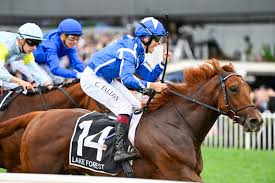
5. Lake Forest (5yo Gelding)
While the staying handicapper Klassleader tops the older horse shortlist, he will sit out Period 3 entirely, heading straight to the Ebor Handicap at York in August.
With all indicators pointing toward a dry summer, Lake Forest becomes my primary older horse to follow. He faces a big task at Royal Ascot, where he holds entries in both the Queen Anne and the Queen Elizabeth II Jubilee Stakes. Always held in the highest regard by the master of Somerville Lodge, he has already rewarded his connections by amassing over £3 million in career prize money.
The decision to geld him over the winter looks to have worked wonders, potentially improving him by as much as 7lb. Provided he gets the fast ground essential to him, he will be a major factor in any top-tier prize he contests from six furlongs to a mile.
Period 3: Epsom & Royal Ascot Summary
The Classic Generation
Maltese Cross heads to Epsom holding a live each-way chance of securing Somerville Lodge its first Derby triumph since Shaamit in 1996. Meanwhile, Saber Strike has shown sufficient class in his recent turf gallops to suggest he could develop into an exceptional horse; he goes to Ascot with a good chance in the Commonwealth Cup, or a favorite’s chance in the Jersey Stakes should connections elect for the softer option.
Aside from those two , I struggle to see any of the yard’s three-year-olds winning at Epsom or Ascot. It has been evident all spring that this classic generation has been slow to come to hand and subsequently lacks the battle-hardened experience required to land the most competitive handicaps of the season.
Bypassing what can often be mentally demanding races for horses lacking “streetwise” toughness will undoubtedly benefit them in the long run.
Progressive types such as Bayaann, Princling, Extremely Zain, Infraad, and Song of Clouds will yield massive dividends from the patience they are being shown now.
The Older Guard
Conversely, the older horses—particularly the long-distance contingent—have looked physically stronger and far closer to peak fitness first time out, leaving them much better positioned to deliver immediately at Royal Ascot.
In the handicap ranks, Valiancy (Copper Horse Stakes), Binhareer (Wokingham Stakes), and, if encountering significant ease in the ground, Eternal Force (Royal Hunt Cup) all hold leading claims. In the Group and Listed contests, More Thunder, Lake Forest, and Almareq (the latter specifically on good-to-soft or soft ground) cross the tandem with excellent opportunities to bring a major prize back to Newmarket.
If you offered William Haggas a guarantee of two winners across the Epsom and Royal Ascot meetings right now, I suspect he would snap your hand off. The subsequent festivals at Newmarket, Goodwood, and York will always remain the primary target zones for this patient yard.
The Verdict: 2026 vs. 2025
On evaluation, this season’s numbers are tracking significantly ahead of 2025.
Last year, from January 1st through to the end of May in the UK and Ireland, the yard saddled 19 runners in Group and Listed company (12 in Listed, 5 in Group 3, and 2 in Group 2), yielding just two Listed victories.
In stark contrast, the same period this season has seen the yard saddle 30 runners in Black Type company, delivering 8 winners in total: 6 at Listed level and 2 highly encouraging Group 2 victories. The foundation is firmly laid for an exceptional summer.
Period 2 Bet Summary.
Once Wiltshire (advised at 20/1) landed the AW Sprint final at Newcastle Period 2 was always going to be profitable. Here is the break down of the results.
Total Bets 39 of which 16 Returned Profit = 41%
Overall profit + 38.10pts. (target 30 pts)
This was above target for period 2 in a normal year. The big win on Wiltshire was counteracted by the defeats of Sky Majesty, Dramatic Star,(twice) Sea Force and Weheedd, who all ran inexplicable badly or were injured in their races finishing tailed off.
The targets for remaining periods:
Period 3 50 pts Period 4 60 points Period 5 60 points Period 6 20pts
Overall target for season 220pts.
REFA HAG TAG 2026.


Leave a comment